Hello world! Since my last blog post, EC announced their closure and I did reclaim my backlist there and get my official reversion letter. My EC titles will officially revert at the end of 2016, to be re-released in 2017.
This means I now have Samhain and EC titles to re-release along with other bits and pieces from other publishers like Cleis Press, Mammoth Books, etc. This is A Lot Of Work ahead. To which end I’ve been busy doing things like acquiring software and ISBNs and all things needed to be my own publisher and do this right.
Part of doing things right will include finishing series that due to schedule or contract conflicts didn’t get completed. And part of it will include deciding if writing a sequel is worth doing or not. There are factors besides sales that come into play when deciding to write a thing, and I will have to think like a writer, a marketer, and a publisher.
In the meantime, it’s the official start of NaNoWriMo 2016, the month that celebrates the joy of writing 50,000 words in 30 days, 1,666 words a day. If you’re writing, hooray for you! I’ll be writing because if ever there was a time to reconnect with joy, it would be during this gawdawful endless election. Which will end, huzzah, and there will be pie, and turkey, and Dr. Strange will hit theaters. Good times.
I started using a Fitbit some time ago. I’m actually on Fitbit One #2 because Fitbit One the First fell off on a walk and was never seen again. It’s a helpful tool, but it has some pros and cons like everything else. The first obvious con being “it can fall off and get lost,” but Fitbit actually has some helpful recovery tips if this happens to you. (They didn’t save Fitbit the First for me, but most people don’t lose theirs in the wild like I did.)
The pros:
Being able to measure what I really did for activity and what I really consumed helped me get a realistic picture of my habits. It didn’t take very many days of logging all my activity and all my food data to realize I had a large calorie deficit and needed to eat more to support my activity. I thought I was less active than I was; I thought I ate more than I did. Surprise! Having some measure of this showed me what I needed to change to reach my goals. The One only measures steps, but I used the Dashboard function to enter all the other stuff I did, from yard work to laundry to swimming. So the limitation of step-measuring has a pretty good work-around.
I got a built-in reminder to drink more water. Very helpful for the person who tends to refill her coffee cup instead of her water glass, and the reminder alone helped me improve my habits.
The badges earned and progress updates and general fitness cheering are motivating. I get notices telling me how many lifetime steps, flights of stairs, and so on I’ve logged. I get notified that I hit my daily goal, or am close to it, and often being just below the next level is motivating enough to get up and hit it just to win the achievement. “I’ve done 40 flights of stairs today, if I do 10 more I can get the 50 flights badge!”
Fitbit has a social aspect, so you can team up with your friends. If you see your friend close to goal you can “cheer” them. If you see that they’re ahead of you, you can try to beat them. But either way it keeps you from feeling like you’re going it all alone. Even from a distance, you can work toward a fitness goal with a buddy. Having another person to be accountable to helps on those days when commitment is flagging.
Privacy settings allow you to control what other people see. Yes, Fitbit still has all your data and doubtless is using it to target ads or whatever, but it’s only public if you make it that way. And you can make some things public, some private, and some visible only to friends.
The Cons:
The Fitbit One really is very small and easy to lose or leave in clothes bound for the laundry.
Even when I manually enter miles bicycled or time swimming, it doesn’t add those logged activities into the daily fitness goal of 10,000 steps. If I swim for an hour, do ten minutes of yoga, and walk 5,000 steps, I still show up as below goal instead of the extra activity counting as the equivalent of another 5,000 steps. Likewise, flights of stairs get logged but don’t count as more effort than regular steps. It would be nice if there was some mechanism that took all the logged activity and gave it a cumulative “goal”. Still, we’re basically dealing with a glorified step counter here so the limitation is sort of built in.
Like most fitness devices, it doesn’t seem to know what to do with women who are pregnant or breastfeeding. I started wearing mine while breastfeeding and had to do a rough calculation of the calories that deducted from my day and plug it into my data to adjust for the difference but there was no setting whatsoever for this. Seems like quite an oversight when you consider how many women get pregnant and breastfeed and need to account for the caloric difference. (I still remember how the Wii Fit screamed at me when I was pregnant and kept gaining weight even though it was the textbook one pound per month, so I have the same beef with pretty much all fitness tech when it comes to this. Fitness tech needs more women in the design stage. Or at least men who recognize female biology as a thing. A setting for “pregnant” or “breastfeeding” isn’t too much to ask, really.)
Overall, I find it helpful so I keep using it. Plus I get to cheer and/or taunt Kate Rothwell and Sasha White while I work out, and I don’t think you can put a price on that.
Look! Bride of Fire has a new cover for re-issue! I’m not going to post a date because I truly don’t know how long it will take to produce all versions and upload and go “live” at the various vendors. Once I’ve done that a couple of times I’ll be better able to predict the “on sale” dates for re-issues.
The state of things: I am working my way through re-issuing the 5 novellas/novelettes I hold rights to already. Yes, it’s taken forever. This is because doing a thing right requires a lot of setup and I’ve had limited resources to direct at this project. (Time and energy are resources.) But with the tools and workflow now in place to do this, it will go smoothly.
Once I’ve got those re-issued, I intend to pull Men of Action and reissue those stories singly with new covers, and then put all seven shorter works together in one anthology in both print and ebook. This way readers who are new to the stories can get them in one convenient (and less expensive) package, and those who are looking to fill out a collection or just want to read a one-off can buy individually.
Meanwhile, I am working on new things and finishing old things. Because more books!
And I’m still poking at the website with much help and support from my fabulous husband who built this and every other incarnation of the site. Some books and comments from prior site aren’t live here yet and this is because I’ve had this site in one form or another for almost 12 years and published, um, many books. 12 years of data is a LOT to deal with. Eventually everything will be visible here, minus things like dead links.
One comment on the new site was a question about buy links to places other than Amazon. Yes, I used to have these. Yes I will have these again. Many links were outdated. Many no longer apply or will shortly no longer apply and so on. The overhead of adding buy links to multiple places per title is one of those things I’ll be working my way through. (Along with, you know, getting the rest of the titles IN the site. I think it’s at a third right now?) It’s a work in progress over here.
At long last, the total rebuild of my site is complete! The site moved from Drupal to WordPress some time ago for easier maintenance on my end, but deciding what the new site should include and incorporating a new theme took some time. Take a look around! I have added some features readers have asked for for years, such as a Newsletter sign-up, and the books are now categorized by Paranormal, Contemporary and so on for reader convenience. This is a big improvement over the former clunky book list by publisher.
Please note that not all titles have been entered as of launch but they’re being added as time permits. If you notice a book missing, it doesn’t mean it isn’t available.
That said, many readers have already seen Samhain’s announcement of impending closure. What does that mean for you? As long as my titles are available for sale through Samhain, you can still buy and download them, confident that I am being paid for each sale. As Samhain reverts my backlist, I will republish them with new covers and announce the dates as we go. Hopefully this will be an orderly process of titles going out of print on their end and republishing on my end without much delay. This also means that Red Queen and Kiss of the Demon will release independently, for readers waiting for those.
I finally have all my ducks in a row to re-release titles that have already reverted, and that’s in progress. I had hoped this would all go faster, but setting myself up to buy groups of ISBNs, have a solid process in place for formatting and uploading, and cover art came with a learning curve. It’s one thing to put a single title out, it’s another to have the workflow and tools to do a large number of titles on an on-going basis.
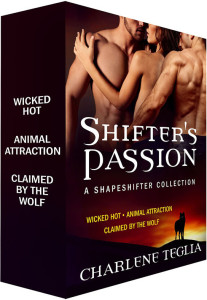
And if you’re looking to pick up an amazing value, St. Martin’s has created a boxed set of Wicked Hot, Animal Attraction and Claimed by the Wolf called Shifter’s Passion, now available on Kindle for 5.99 US. A smoking hot deal on three smoking hot titles!
Ah, January, when everybody makes a pile of resolutions. Resolutions are fun, shiny, they live comfortably in the future so you aren’t responsible for them today. But does nobody think of the past? In lieu of resolutions, here are 10 things I’m glad I did.
I’m glad I’ve visited most of the lighthouses up and down the Oregon and Washington coast. Lighthouses are fascinating pieces of history, and if The Big One hits Cascadia tomorrow, I will not weep for my missed chance to see the tallest lighthouse on the Oregon coast or the lighthouse on Dungeness Spit.
In the same vein, I’m glad I got to explore Olympic National Park and the San Juan Islands. We might return to visit again, but if we don’t, I have crossed that off my bucket list with a vengeance; after a decade my boots have been pretty much everywhere over there.
I’m glad we lived on Bainbridge Island. Ultimately we moved to buy a house elsewhere, but it was a fabulous place to live and I’m not sure I would ever have been a regular visitor to the Bloedel Reserve if we hadn’t. So I wouldn’t know about the holiday dollhouse display. If you live anywhere near Bloedel, you should visit.
I’m glad we renovated a vintage camper. We learned a lot that will be valuable if we ever want to do that again, or will just come in handy when buying/maintaining our next camper. Vintage campers are an experience and buying ours opened up a whole new world.
I’m glad I learned how to garden, starting by helping my parents with theirs growing up and accelerating when my mom gave me my own plot and freedom to plant WHATEVER I WANTED. I have been going crazy with seed catalogs ever since. If you have never grown a tomato you might not even know how many varieties exist or how different they look and taste. Thanks Mom!
I’m glad I learned how to cook. Not only are restaurants expensive, if you have children in tow everything takes too long, and also there is always the risk of allergy problems. But aside from saving time, money and being good for health, cooking is art and science and excellent hands-on creative fun for everybody. I’m glad my kids are now big enough to cook with me.
I’m glad I learned to swim, skate, ski, bike, hike, row, run, kickbox, dance, and have always kept moving. Exercise is easier to keep part of your life when it’s something you enjoy and enjoying lots of things makes it easier to keep doing at least some of them over time. Downhill skiing is now too much for my knees, but there is cross country. And when that’s too much, there will still be swimming. And so on.
I’m glad I took art lessons. I’d always wanted to do it and one day I realized I had time and money and why not? So I did it. Not just once. I took lessons from 3 different teachers, including one workshop that turned out to be full of painters who’d had juried shows and it was interesting to be the lone writer in the room. But art is expansive and so is learning something new.
I’m glad I have been to Hawaii. It’s like no place else.
I’m glad I wrote and published a crapton of books. If I die tomorrow, my regret will be that I didn’t manage to write and publish 100 of them like Isaac Asimov, but I won’t have to regret that I didn’t write or publish any.
For 2016, I resolve to do more of what I’m glad to have done in the past, which pretty much boils down to continually learning and trying new things and continuing to do the things I enjoy, and writing and publishing more books. I know 2015 was the Year of Mindfulness for a lot of people. It turns out I am not very enlightened. Mindfulness makes my eyes glaze over. But artfulness I can get behind. Taking a creative approach to living and committing art whenever possible, whether that art is movement or music or a garden or dinner or a book, I would like to live more artfully in 2016.
So yeah, the new site is live but before I start celebrating this is like declaring your room clean as long as nobody opens the closet or looks under the bed. There are broken links and outdated bits that need updating and the husband is still plowing through the massive task of importing all the comments from the previous site. But the data is all here, all ten freaking years worth of it, and once things are up to date I have what I’ve needed for a few years: an easy to update, maintenance free (mostly) website, thus freeing me from admin headaches so the little time I have for writing can be spent writing. And formatting all those stories I have rights to for re-release.
I will be re-releasing the five novellas/novelettes Wolf at the Door, Mad Stone, Roped, Bride of Fire and Nuns and Huns as individual ebooks and also in a combined ebook and print anthology. The two shorts in Men of Action will be added to the ebook and print anthology for a total of seven reads, so I’m calling it Seven Minutes In Heaven. Looking forward to having all the stories I’ve contributed to various anthologies over the last few years collected in one book!
Meanwhile, here’s David Bowie to get you through hump day.
Yes, I know this site is sadly, horribly, embarrassingly out of date. This is because Shiny New Site is almost ready to launch so updating here means duplicating the database over there and, well, the answer is just to get the new site live already.
Something Wild is out in print from Ellora’s Cave with a gorgeous cover, and other things are afoot.
Last Thursday I did a talk and reading at Eagle Harbor Books spearheaded by the fabulous Serena Bell and Rachel Grant. Harlequin generously donated many books to help win new readers to romance, as the bookstore is interesting in enlarging the romance section and encouraging romance readership. So readers came away with books by new authors to try out as well as signed books by the participating authors (us) and here is what I said about romance and why I write it.
Romance is a sub genre of fantasy and the fantasy of romance is the happy ending. “They all lived happily ever after” is how every fairy tale ends and romance novels are modern day fairy tales where the protagonists get what they want and a happy ending. Romance is the only genre that delivers the fantasy of the happy ending consistently and it gets a lot of criticism for being unrealistic because of it. But being able to imagine that a happy ending is possible is the first step to creating and writing your own. Whether that means a happy ending to the career change you want to make or the new friendships you want to build or building a successful romantic relationship, it starts with the hope, the ability to imagine and to believe that what you want is possible.
So romance is the fiction of hope. It’s also a genre of fiction that focuses on relationships. Not just romantic and physical relationships but the full spectrum of relationships. Family relationships, coworker relationships, friendships. The relationships in our lives are part of what helps us succeed in life, what helps us through difficult times, and have a huge impact on our happiness and health. The best relationships bring out the best in us and help us be more of who we truly are. Like the Velveteen Rabbit, love makes us real. The worst relationships make us less of who we really are, and in romance, those characters will turn out to be the villains. That person who wants you to feel less so they can feel like they’re more is not really your friend or your romantic partner, and you see that play out in a romance novel.
Fiction is where we can imagine how this choice or that action would lead to that result and it’s a safe place to vicariously experience what it would be like to choose what the protagonist chooses. Reading fiction helps us build empathy, which is one of the keys to any successful relationship in real life, and this is one of the ways it does that, by placing ourselves in our imagination in another person’s shoes and seeing the world from their point of view. Learning to have more empathy is not at all unrealistic, it’s a scientifically documented side effect of novel reading, ANY novel reading. And experiencing the fantasy of hope, imagining your own hopeful outcome, that’s also a scientifically sound premise. Top performers, athletes, imagine themselves performing at their peak and they have measurable changes take place while they’re imagining this. Imagination is powerful, it’s more than staring out a window daydreaming, it’s a tool that can improve athletic performance or help us practice asking for a raise. So the fiction that delivers the fantasy of happiness, of hope, is a tool that can help us write our own happy ending with very practical real world results.
This is why I believe in romance as a writer, that it’s something worth doing. And why I love it as a reader, why it’s the genre I’ll turn to when I’m having a bad day, and I need a dose of hope and the reminder that I’m the protagonist of my own story and it’s up to me to make the choices and take the actions that will write my happy ending.
First time novelists are in a tough place. Overwhelmingly before the book is even finished the questions are flying; do I need an agent yet? How do I get it to a publisher? Do I need to copyright it before an editor reads it?
These are understandable questions, but the biggest question facing the first time novelist is really: can I do it? Can I actually write a whole book? Until that question is answered, none of the others matter very much. And after that first vital question is answered, there’s another biggie that comes before the rest: is it publishable?
Nobody wants to sit down and write a whole novel that will never sell. This is understandable. I balked at the idea myself. Even knowing the percentage of first novels that never sell (it’s big), I wanted to believe that mine would be the exception. My first novel was not the first to sell, and before I sold it, I had to revise like crazy and fix a major structural defect. It was worth doing because it had some key things going for it: good writing overall, lively characters, and a story that grabbed me no matter how many times I put it aside. Oh, and it was finished. Without those four factors, it wouldn’t have been salvageable let alone publishable.
We live in a world of words and writing. We write resumes and cover letters and business letters and emails and invitations and lists. This leads to the belief that anybody can sit down and write a book. I believe anybody who really, really wants to can, but the barrage of words we live in and the daily writing we all do is a whole world apart from writing fiction. Writing fiction is like going from making pinch pots to using the pottery wheel.
Pottery is an incredibly difficult art form. Those pieces of clay, it looks so easy. Watch beginners using a wheel for the first time. Construct after construct begins to rise from the lump of clay, and then collapses. It’s messy. It’s frustrating. And it takes a lot of practice and patience before that first lopsided vase comes off the wheel.
But because we live in words and not clay, we think a novel should be easier. It isn’t. Be prepared to get messy and frustrated and to make mistakes and fail before getting it right. That doesn’t mean it’s impossible. Doesn’t mean your first novel won’t defy the odds and be publishable after you manage to get it to complete.
But worry about getting it to rise on the wheel and not collapse back into a lump of clay before worrying about copyright, how to get it read by an editor, how to get an agent or when you need an agent. And allow yourself to be a beginner. Don’t be too hard on yourself or your first attempt. Everybody starts somewhere. Plenty of first attempts make really great paperweights (or help get a fire going in the winter), but the next one is better and the one after that, wow.

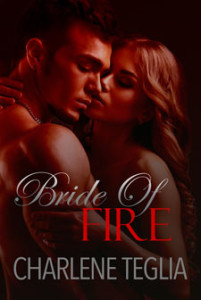 Look! Bride of Fire has a new cover for re-issue! I’m not going to post a date because I truly don’t know how long it will take to produce all versions and upload and go “live” at the various vendors. Once I’ve done that a couple of times I’ll be better able to predict the “on sale” dates for re-issues.
 At long last, the total rebuild of my site is complete! The site moved from Drupal to WordPress some time ago for easier maintenance on my end, but deciding what the new site should include and incorporating a new theme took some time. Take a look around! I have added some features readers have asked for for years, such as a Newsletter sign-up, and the books are now categorized by Paranormal, Contemporary and so on for reader convenience. This is a big improvement over the former clunky book list by publisher.
Recent Comments